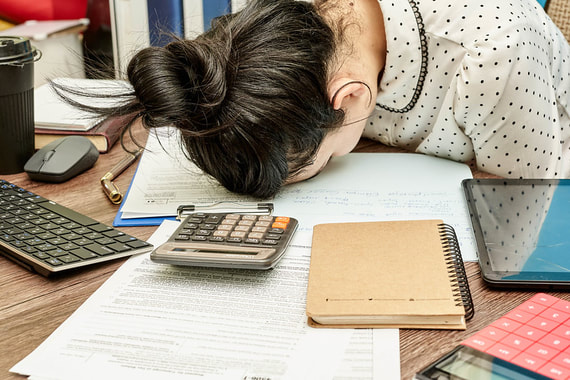
  The more a person goes on with life, the more stressful situations we learn to face. A sometimes, there comes a time when all of these situations gather up and form one big gloomy cloud that seems impossible to escape. That affected person tries hard to run away from the distress of that cloud, but sometimes the situation worsens up to the extent that it becomes difficult to carry on. These situations can be overwhelming, and soon they eat up the person alive.
But this doesn’t mean that all of this cannot be addressed and managed. In fact, there are many ways a person can reduce the amount of stress he is feeling and many times, the small steps the person takes can help more effectively than going to a therapist every week. Even if you go to the therapist every week, there would be times when you need immediate help or relief, and the therapist won’t be there to help. At times like these, self coping techniques and skills are the best way to feel normal and escape from the difficult, overwhelming situation of stress and discomfort. Many techniques like the IMPROVE technique, the TLLP techniques and simple distractions can help to reduce the stress a person is feeling at a certain moment. Sometimes distractions are the best way to make your body feel a little bit relaxed. These distractions can include calling a friend, focusing on another thing, watching something relaxing, or even listening to music. These ways can help the body feel at peace. At the same time, there are certain ways how you can change the sensations of the body. Sometimes a severe temperature change, a body massage, or even exercise can change the way your body perceives things. It can alter the message in the brain, and instead of producing stress hormones, they produce serotonin or dopamine that can help you alleviate the stress. Through this, the body can change from Flight or Fight mode to normal condition, and you will feel relaxed. Some things seldom go unnoticed. The way you perform certain tasks, your time management, your daily habits, and the diet that you follow all year long. These factors affect the mental health of your brain. If a person improves these factors and focuses on each thing one by one, it is almost impossible to get overwhelmed by the stress. The affected person needs to know that there is a solution to everything, and if the answer cannot be found, he must learn to accept things as they are with the coping technique of radical acceptance. Once the person starts to accept the things he cannot change and work on the things than can, everything becomes a little better. Take breaks, go on long walks, meet nature, and enjoy life to the fullest. Surely the stressful situations might come and go, but it doesn’t mean that life is tough to live. It just needs the right company, and a little positivity and everything can be conquered with a little effort.
0 Comments
 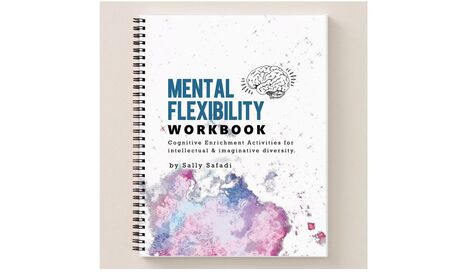 Learning the art of mental flexibility can be an extremely important skill for approaching low self-esteem. Using creative prompts and art therapy, we can help participants find healthier ways to cope with their feelings during stressful times. Being “flexible” in the mental sense can be defined as undergoing less distress during stressful events. An example of this is studied in: On importance of new group therapy for decrease of agitation during the critical period of nursing shift changes on an acute psychiatric inpatient floor. The Journal of Hospital Administration published this article in May 2020. The purpose of this study was to observe how group therapy can help patients in inpatient care with stressful times (such as nurse shift changes). Specifically, the study’s authors wanted to see how art based group therapy could help patients. This study was observational and was taken from the psychiatric unit in Central New York. The researcher’s purpose of this studying was to try to find something to help calm down patients during stressful times. The researchers found that patients had “increased agitation” during nurse shift changes. In an effort to solve this issue, researchers decided to introduce art-based therapy that focuses on activities that build mental flexibility. By using creative prompts and critical thinking exercises, researchers hoped to show decreased agitation and better use of coping skills during these stressful times. The art therapy group in this study was called ’Neurons Away’. This experiment was set up so researchers were able to study the five hour period surrounding these art therapy initiatives. They would then track several factors such as attendance, agitation levels, medicine usage for anxiety, and a scale to track emotions (Likert-type scale). The purpose of this study was to find out if patients can develop healthier coping skills while improving their mental flexibility during these distressing situations. After three months the need for “agitation medication” decreased by seven times and the medicine used for anxiety decrease by four times. The group was seen to create a “playful” environment which helped patients to navigate and better adapt to the “chaotic” environment during shift changes. Overall, patients were seen to be happier during the surrounding hours of shift changes. While on the other hand, negative emotions such as sadness and anger were shown to decrease as a result of the art-based group implementation. This period of observation shows that there are other ways to approach stressful times for patients receiving psychiatric care. This should be something that is considered more often as it is much safer than some of the side effects of common drugs. The authors of this study suggest that this study can be explored even further with other settings and other forms of treatment. They suggest that not only exploring the effects of “Neurons Away” through further experiments, that there should be further exploration of other creative art-based treatments. Looking at these issues (especially in psychiatric units) can help healthcare professionals find better ways to help patients succeed in treatment. * Leontieva, L., Safadi, S., & Roe, C. (2020, May 11). On importance of new group therapy for decrease of agitation during the critical period of nursing shift changes on an acute psychiatric inpatient floor | Leontieva | Journal of Hospital Administration. http://www.sciedupress.com/journal/index.php/jha/article/view/17708 |
AuthorWrite something about yourself. No need to be fancy, just an overview. ArchivesCategories |
 RSS Feed
Photos from wuestenigel (CC BY 2.0), wuestenigel, Krista Baltroka
